Online Shopping 3D Illustration: A Versatile Visual Tool for Modern Marketing and Design
In the fast-evolving digital landscape, visual content has become a cornerstone of online engagement. Among the most impactful tools available to designers and marketers is the Online Shopping 3D Illustration. This type of illustration brings product visuals into a dynamic, immersive format that enhances user experience, conveys brand identity, and supports a wide range of applications—from website design to promotional materials.
Understanding Online Shopping 3D Illustration
An Online Shopping 3D Illustration is a digital graphic that uses three-dimensional rendering techniques to depict products or scenes related to e-commerce environments. These illustrations are often stylized, meaning they balance realism with artistic interpretation to maintain visual appeal while delivering clarity. Unlike traditional photography, 3D illustrations offer complete control over lighting, angles, textures, and backgrounds, making them ideal for showcasing items in a variety of settings without physical constraints.
The value of these illustrations lies in their ability to create engaging visuals that can be adapted for different platforms and purposes. Whether you’re designing a landing page for an online store or crafting social media promotions, a well-executed 3D illustration can significantly elevate your message’s impact.
Key Characteristics and Practical Value
Several key features define the effectiveness of Online Shopping 3D Illustrations:
- High Customizability: Designers can tweak colors, materials, and layouts to match brand aesthetics or campaign themes.
- Consistency Across Platforms: The same illustration can be scaled and modified for use on websites, mobile apps, print posters, or video backgrounds.
- Enhanced Realism: Advanced rendering techniques make even abstract or conceptual designs feel tangible and lifelike.
- Time and Cost Efficiency: Once created, these illustrations can be reused across multiple projects, reducing the need for repeated photo shoots or complex animations.
These characteristics make 3D illustrations particularly useful in UI/UX design, where visual hierarchy and clarity are essential. They also support A/B testing by allowing variations of the same concept to be presented to users in different formats.
Applications in Different Industries
3D illustrations tailored for online shopping have found widespread adoption across various sectors. Here are some common use cases:
1. Website and App Design
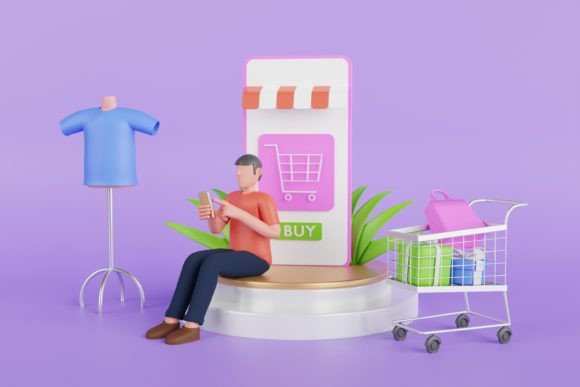
For e-commerce platforms, integrating 3D illustrations helps highlight products from multiple angles, providing customers with a more interactive browsing experience. For instance, a fashion retailer might use a 3D model of a mannequin wearing the latest collection to showcase outfits in a visually appealing and informative way.
2. Social Media and Digital Banners
Designers frequently leverage 3D illustrations to craft eye-catching banners and social media posts. These visuals stand out in crowded feeds due to their layered depth and vibrant details. When saved as JPG or PNG files, they remain lightweight yet high-quality, ensuring fast loading times and compatibility across devices.
3. Print and Promotional Materials
Even in print, 3D illustrations can simulate depth and motion. Catalogs, flyers, and posters benefit from this technique, especially when aiming to present a modern or tech-savvy image. The flexibility of file formats like PNG allows for transparent backgrounds, which are invaluable for branding and overlay effects.
4. Educational and Instructional Content
Educators and content creators use these illustrations to explain how products work or fit together. An electronics tutorial might feature a 3D illustration of a smartphone with labeled components, offering learners a clearer understanding than static images ever could.
Who Benefits Most from Online Shopping 3D Illustration?
This type of illustration is especially beneficial for professionals who rely on high-quality visuals to communicate effectively. Here are a few groups that can derive real value from it:
- Marketers: Create compelling ad campaigns that capture attention and convey product benefits clearly.
- Freelance Designers: Expand their portfolio with versatile assets that can be used across multiple client projects.
- Small Business Owners: Present their products professionally without the cost of hiring photographers or models.
- UI/UX Developers: Build intuitive interfaces with realistic product representations that enhance user interaction.
- Bloggers and Publishers: Improve article engagement with visual elements that break up text and add context.
For example, a startup selling smart home gadgets may use a 3D illustration to show how each device integrates into a living space. This approach not only informs potential buyers but also builds trust through visual storytelling.
Quality and Usability Considerations
When selecting or creating an Online Shopping 3D Illustration, quality should be a top priority. High-resolution JPG or PNG files ensure crisp visuals at any size, but the underlying 3D model must also be detailed and accurate. Poorly rendered illustrations may look flat or unrealistic, which can diminish their effectiveness.
Usability depends largely on the software used to generate or edit the illustration. Tools like Blender, Adobe Dimension, and Cinema 4D provide robust capabilities for both beginners and experts. However, even those without technical expertise can benefit from pre-designed 3D illustrations available on asset marketplaces such as Envato Elements or Adobe Stock.
Flexibility is another major advantage. With layers and editable components, these illustrations can be adjusted for different color schemes, sizes, and compositions. This adaptability makes them a long-term investment for businesses looking to maintain a cohesive visual strategy.
Strengths and Limitations in Real-World Use
One of the strongest points of Online Shopping 3D Illustration is its scalability. A single illustration can serve as the foundation for multiple creative outputs, including:
- Banner ads for Google Ads or Facebook marketing campaigns
- Hero sections on landing pages or homepages
- Email newsletters with product highlights
- Presentation slides for pitches or proposals
However, there are limitations to consider. While 3D illustrations offer incredible customization, they may require additional time and resources to modify compared to simpler vector graphics. Also, not all audiences respond equally to 3D visuals—some may prefer minimalist or flat design styles depending on the industry or platform.
Professional Observations and Recommendations
From a professional standpoint, I’ve observed that Online Shopping 3D Illustrations perform best when used strategically rather than as a generic fill-in. For instance, using them to highlight flagship products on a homepage can increase click-through rates and reduce bounce times. But if overused, they can overwhelm viewers and dilute the message.
I recommend starting with one or two core illustrations that represent your brand or product line. Test them in different contexts—such as social media thumbnails versus full-page banners—to see how they resonate. If you're not generating them in-house, invest in assets from reputable sources to ensure consistency and professionalism.
Another tip is to pair 3D illustrations with clear typography and concise copy. Let the image do the heavy lifting in conveying emotion and context, while text reinforces key selling points. This combination often leads to higher conversion rates and better audience retention.
Long-Term Value and ROI
Over time, the use of 3D illustrations can yield significant return on investment. Their reusability means that once created, they can support ongoing campaigns, seasonal updates, and new product launches. For startups and growing businesses, this is a cost-effective way to maintain a polished brand image without constant redesign costs.
Moreover, the trend toward immersive and interactive web experiences ensures that 3D visuals will continue to be relevant. As consumers grow accustomed to richer digital content, brands that incorporate 3D illustrations into their strategies are likely to stay ahead of the curve.
Final Thoughts
Online Shopping 3D Illustration is more than just a visual gimmick—it's a powerful tool for storytelling, branding, and engagement. Its strengths in realism, adaptability, and cross-platform usability make it a valuable asset for professionals across disciplines. That said, success depends on thoughtful application and alignment with your target audience’s expectations.
If you're involved in digital marketing, design, or product promotion, exploring 3D illustration options is worth considering. Evaluate your needs carefully, test different formats (JPG vs. PNG), and invest in quality assets that reflect your brand's vision. Done right, these illustrations can transform how your audience interacts with your content and products.