Houses and Skyscrapers: Strategic Use of Isometric Building Sets in Design and Communication
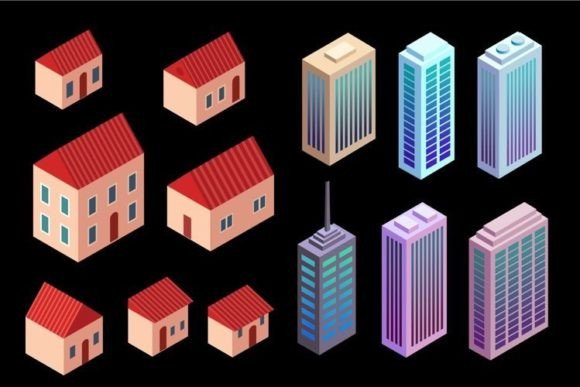
When it comes to visual storytelling, concept development, or game design, having the right assets can make all the difference. The Houses and Skyscrapers isometric set provides a powerful toolkit for creators who want to communicate ideas effectively while maintaining artistic integrity. This collection includes 13 high-quality building illustrations—ranging from cozy little pink houses with red roofs to towering skyscrapers—offered in multiple formats such as JPG, PNG, SVG, AI, and EPS. Whether you're illustrating urban landscapes, planning marketing materials, or developing a game world, this resource offers flexibility, clarity, and professionalism.
Why Houses and Skyscrapers Matter in Visual Strategy
Isometric visuals are more than just stylized representations—they are strategic tools that simplify complex concepts. In architecture, urban planning, and even digital marketing, these types of images help bridge the gap between abstract ideas and tangible outcomes. The Houses and Skyscrapers set, with its clean lines and consistent style, allows designers to craft environments that feel both realistic and accessible without the need for photo-realistic imagery.
Consider the following use cases where this asset set can provide value:
- Game Development: Create immersive cityscapes quickly with pre-designed buildings that maintain visual harmony.
- Infographics and Presentations: Illustrate data points like population density, economic growth, or real estate trends using scalable vector graphics.
- Branding and Marketing Materials: Represent locations, communities, or corporate expansion visually in a way that’s engaging and on-brand.
- Website Mockups and App UI: Use transparent PNGs and SVGs to integrate buildings into digital interfaces seamlessly.
Aligning Assets with Business and Creative Goals
Every creative project has a purpose, and the right assets should support that intent. When you choose to incorporate the Houses and Skyscrapers set into your work, consider how each element contributes to your message. For instance, if you’re designing an app focused on neighborhood revitalization, using a mix of small pink homes and modern skyscrapers can subtly convey contrast and progress.
Here are some practical tips for aligning these assets with your goals:
- Define Your Message First: Before selecting any image, ask yourself what story you want to tell. Do you want to highlight community? Growth? Sustainability?
- Match the Tone: The pastel pink houses with red roofs may be ideal for children's games or educational platforms, while sleek skyscrapers might better represent corporate innovation or urban development themes.
- Use Consistency: Stick to one color scheme or architectural style within a project to avoid visual clutter and ensure brand cohesion.
- Layer Thoughtfully: Combine different elements from the set to build depth and realism. A skyline with varied building heights adds dynamism and authenticity to your designs.
Planning and Positioning: How to Integrate These Assets Effectively
Effective integration of the Houses and Skyscrapers set requires careful planning. Start by identifying where the assets will appear most impactfully. For example, in a website banner promoting a real estate service, placing a large skyscraper behind smaller homes can symbolize opportunities for investment and growth.
Positioning also matters in user experience. If you're creating a mobile app with interactive city maps, using transparent PNGs ensures that navigation buttons and icons remain visible. SVG files offer the advantage of scalability, making them perfect for responsive web design where resolution can vary across devices.
For those working with Adobe Illustrator, the included AI and EPS files allow for deep customization. You can adjust colors, add shadows, or scale individual components without losing quality. This makes the set ideal for professionals who need to tailor visuals precisely to their brand guidelines or client needs.
Enhancing Creativity and Productivity
One of the most overlooked benefits of using a curated asset set like Houses and Skyscrapers is the boost in productivity it offers. Instead of spending hours sketching or sourcing individual building images, you gain access to a ready-to-use library that maintains visual consistency. This not only saves time but also reduces cognitive load, allowing you to focus more on the overall design and messaging strategy.
Moreover, the variety in the set encourages creative thinking. With 13 unique buildings, you have enough diversity to craft compelling narratives without overwhelming your audience. Think about how you can combine different structures to reflect cultural contrasts, historical changes, or even thematic stories within a game or simulation.
Here’s how to leverage this creativity practically:
- Use the buildings as placeholders during early design stages to test layout and flow.
- Create mood boards that blend the isometric style with other visual elements to explore branding options.
- Repurpose the same assets across multiple platforms (print, web, social media) to maintain a cohesive identity.
Decision-Making and Long-Term Value
Design choices should always serve a strategic purpose. When considering whether to use the Houses and Skyscrapers set, evaluate the long-term value it brings to your project. Will these assets grow with your brand? Can they be reused across different campaigns or products? The answer lies in how well they align with your core message and adapt to future needs.
Let’s say you’re launching a new line of eco-friendly housing solutions. Using the pink house with a red roof as a recurring motif could help reinforce your brand’s approachable and innovative identity. As your business expands into commercial properties, the skyscraper models can illustrate your broader vision without requiring a complete rebrand.
To maximize the longevity of these assets:
- Store Them Strategically: Organize the RAR archive by category or use case so you can retrieve specific files quickly.
- Document Their Usage: Keep a log of where and how each asset was used to identify patterns and potential areas for reuse.
- Plan for Scalability: Choose formats like SVG and AI that allow for easy scaling and modification as your project evolves.
Risks of Random Asset Use
While the Houses and Skyscrapers set is versatile, using it without clear direction can lead to miscommunication or visual fatigue. For example, overloading a presentation with too many skyscrapers might confuse the audience instead of reinforcing your message. Similarly, mixing unrelated styles or scales can break immersion in a game environment.
Before relying on these assets, ask yourself:
- Does this visual element support my key message?
- Am I using it consistently with other design elements?
- Will it still be relevant six months from now?
If the answers aren’t aligned, it’s time to rethink your approach. Remember, the goal isn’t to showcase every asset in the set—it’s to enhance understanding and engagement through intentional design.
Real-World Applications and Examples
Let’s look at a few scenarios where this asset set has proven useful:
1. Urban Planning Reports
A local government office needed to present a proposal for a mixed-use development. By incorporating the isometric houses and skyscrapers into infographics, they were able to show the balance between residential and commercial spaces clearly. The use of high-resolution JPGs ensured that printed reports looked professional, while the SVG versions allowed for interactive online presentations.
2. Game Concept Art
An indie game studio was designing a simulation game centered around city-building. They downloaded the Houses and Skyscrapers set to prototype various districts. The transparent PNGs made it easy to overlay textures and lighting effects, while the AI files enabled precise editing for custom building features.
3. Real Estate Brochures
A boutique real estate agency wanted to create a brochure for a luxury housing development. They used the pink house with red roof as a central icon, symbolizing charm and family appeal. The skyscraper assets helped illustrate the high-end commercial and residential towers available in the area, giving the brochure a balanced and aspirational tone.
Strategic Observations for Effective Deployment
Understanding when and how to deploy these assets can elevate your work from good to great. Here are a few observations to keep in mind:
- Use Houses for Emotional Connection: Smaller homes tend to evoke feelings of warmth and familiarity, which can be leveraged in marketing campaigns targeting families or homebuyers.
- Skyscrapers Signal Ambition and Scale: These structures are often associated with big cities, innovation, and growth. Use them sparingly to emphasize key points like expansion or corporate presence.
- Combine for Narrative Depth: Layering different buildings can help tell a richer story—think of showing old versus new neighborhoods or industrial zones next to residential areas.
- Optimize for Accessibility: Since the set includes transparent backgrounds, ensure that text or important elements placed over them remain legible and impactful.
The beauty of the Houses and Skyscrapers set lies in its ability to support both emotional and logical communication. When used thoughtfully, it can transform abstract ideas into relatable visuals, guiding audiences toward informed decisions.
How to Get Started
If you’re new to working with isometric sets, here’s a quick guide to getting started:
- Extract the Archive: Open the RAR file to access all 13 assets in their respective formats.
- Select the Right Format: Use JPGs for print and static displays, PNGs for transparency needs, and SVG/AI/EPS for digital projects requiring scalability or editing.
- Experiment with Layouts: Try arranging the buildings in different compositions to see how they affect the visual narrative.
- Integrate with Other Assets: Pair the buildings with roads, trees, people, or vehicles to create full scenes that resonate with your audience.
By starting small and iterating based on feedback, you can develop a strong visual language that supports your objectives without unnecessary complexity.
Conclusion
The Houses and Skyscrapers isometric set is more than just a collection of building illustrations—it’s a strategic tool that can enhance communication, streamline workflows, and support long-term creative goals. Its inclusion of high-resolution files and editable vector graphics ensures that it can meet the demands of diverse projects, from simple web banners to complex game worlds.
As with any resource, success depends on how intentionally you apply it. Take the time to plan, experiment, and refine your approach. And remember: the best visuals don’t just look good—they do good.
Thank you for choosing a set designed with purpose. We hope you enjoy the creative freedom it offers.